We used to have ideas of how the planets moved in relation to the sun. Then we discovered some facts about how the solar system worked. The heliocentric model was first proposed as an idea, then developed as a mathematical model, observed in 1727, and conclusively proven in 1838.
Since then, it has been accepted as a fact. Sure, there is detail to understand, but the broad sweep, the big picture, is no longer debated.
This post imagines a future where designing societies in alignment with unchanging features of human psychology has become undebatable.
In this future, the broad sweep of human nature, the psychological basis of legitimacy, and our evolved human social form have become cold, hard facts. The anthropology that sits within political theory is firmly based on empirical evidence rather than assumptions, wishes, or projections.
The year is 2525
People in 2525 look back at the 2000’s like we look at the 1700s. Although they can empathise with our lack of knowledge, they still find it hard to understand why we would not build a society taking into account the realities of the human mind.
In their eyes, our period — the middle-democratic period — is full of lessons. A governance academy uses historical data to run simulations on monist ideologies that ignore the pluralistic reality of human nature.
At school, children learn the importance of guarding against overly ideological movements. This is (obviously) because they tend to elevate a single moral domain to mobilise and gain power.
A lot of media survives from our time. This provides ample historical footage for documentaries. Our descendants are surprised by our primitive, ideologically driven debates.
At a national democracy museum, exhibits describe the 20th Century as a time when people followed rigid ideological frameworks — systems that were often vulnerable to extremism.
The end of the middle-democratic period was marked by a decisive shift away from ideological frameworks. This change allowed democratic societies to escape the cyclical crises produced by ideological swings and develop more stable political systems.
The emerging consensus tipped the balance further in favour of liberal democracy. As a result, the rate of democratic failure declined, and by 2525, around eighty per cent of the world’s population live in democratic states.
Here is a longer version of the speech. (Generating long AI videos is too tedious without spending big bucks.)
This (Less Ideological) Future is Inevitable
It is the direction of travel. Whether it takes us 10 or 100 years to incorporate it into political thought, the empirical nature of a behavioural approach makes it hard to avoid once the knowledge exists.
The more we understand about the behavioural foundations of legitimacy, the better equipped we are to design and think about politics in ways that align with it. Today (2026), the gap between what we know about human nature and what we apply in politics remains large. Closing that gap will be one of the central political tasks of the coming decades.
And, a quick thanks!
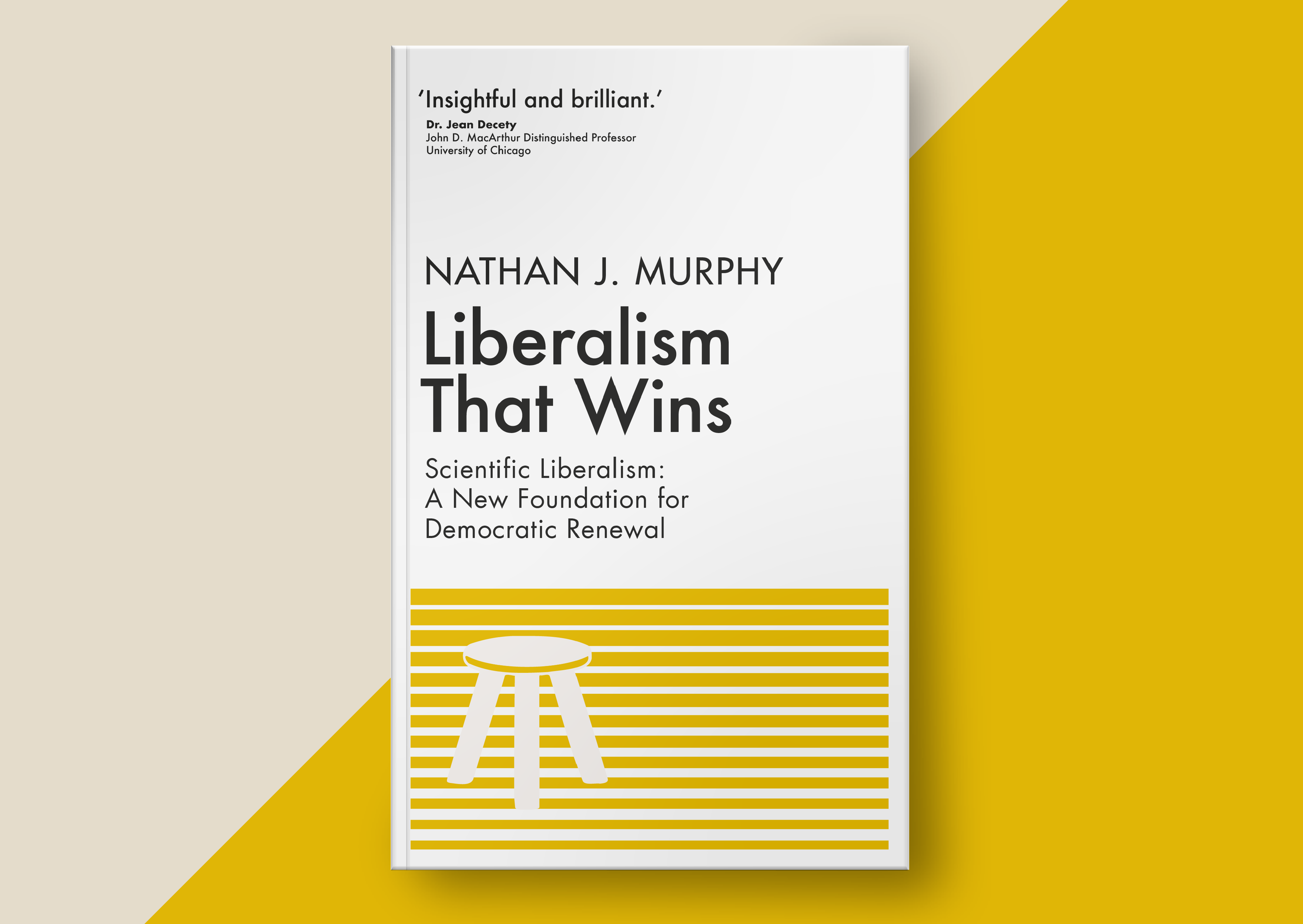
To Lionel Page who kind enough to write a few words about my book Liberalism That Wins. Lionel is a behavioural economist who writes excellent pieces on cooperation, morality, and more!
“Too often discussions about how society should be organised do not take into consideration our modern understanding of human psychology: how we think and behave and why we think and behave the way we do. Political theory is then too often built on clouds. They are beautiful discussions that implicitly or explicitly assume some ideal humans forming societies. Unfortunately, history has taught us that building political projects on ideal conceptions of human nature is fraught with risks. First, many institutions might fail because people do not behave as ideally as initially assumed. Second, the state and its leaders might proceed to make actual humans fit the ideal picture assumed by the ideology, often at a great cost in terms of political rights and social well-being.
From that perspective, this book is very much welcome. Fully attuned to the modern evidence on human psychology and behaviour, Nathan Murphy makes a case for liberal institutions for real humans. More than useful, this approach is greatly needed at a time where Western democracies are facing unprecedented challenges, tensions and, in some cases, political regression. This book will be a great read for any politician, journalist, and thinker interested in the prospect of liberal projects that do not rely on enticing but misguided wishful thinking and actually works because it takes the constraints of reality seriously.”
Subscribe to Lionel here.
Liberalism That Wins is available in paperback, ebook & audiobook:
Amazon UK / US / CA / DE / FR / ES / IT / NL / PL / SE / BE / IE / JP / AU
Also: Audible | Apple | Kobo